
Outlier
I’m on Spring Break, doing what I do – looking back, looking forward, sinking into introspection. I’m mostly alone this week, by choice, with few guardrails. I could exercise or not. I could read or not. I could watch shows or not. I can’t tell if I’m depressed or just decompressed. What I do know is that I must wander, allowing the clatter and din to ebb (typical crossword fill words).
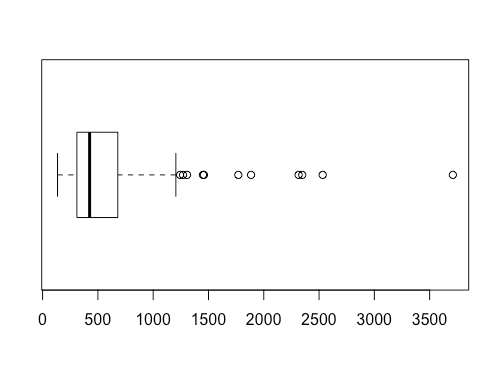
At dinner with my dearest friends last night, I recounted some of what had happened over the past school year. They have heard some of my stories this past year, but this time felt different. I’ve always thought this school year was extraordinary, an outlier in a career that has washed over me with a numbing sameness that never bothered me. I now see myself, not “the school year,” as the outlier. This is not a brag, although I do want to flex about significant accomplishments. This is also not the claim of a victim or the circumstance of someone without agency. This year, I reached toward a version of myself I didn’t think possible.
Pedagogically, I challenged myself to go all-in on the Standards-Based Teaching & Learning (SBTL) approach (I should trademark that acronym) I implemented in the past few years. The flex is this: I am in year four of growing this idea, which has shown results beyond any thoughts I could have imagined. The challenge has always been: what do I do with subject-specific content in a skill-based approach? I reduced my evaluated skills to six: communication, CER (argumentation), data (how students process quantitative information), impact on society, and moles. I am “running” all of the details through these buckets, offering multiple chances for students across the semester.
My teaching world feels wildly and wonderfully different than years ago. The conversations I have with students focus on the content and understanding of the course, not the grade on an assignment. Sure, they have reactions to disappointing results, but they understand that they have chances to grow and improve. They see the possibilities for themselves in a way that doesn’t feel crushing or at least as debilitating as before. When I have tough conversations with them about low performance, many have told me they are making wise choices about how they use their time, and they know the grade doesn’t reflect their potential. They own their learning.
What’s remarkable about the results comes from my trust in my students, although they might not frame it that way, as well as their trust in me, which is always tenuous. Trust is a funny word that is defined uniquely by each of us, and we have reached a central understanding of what it means in my course. I will offer chances to show proficiency in each standard, and students will engage thoughtfully (mostly) at every step. When the end of the semester arrives, with each skill practiced multiple times, they have a chance to confirm what they have learned. There are no more tears, increased engagement, and everyone is more relaxed. After all, it is just high-school chemistry. (and I do LOVE my students)
This has unfolded as the basic structures of the school collapsed. The Board fired the Head of School. The temporary Head of School fired the Assistant Head of School. The Head of the Upper School has left. The Director of Diversity was put on leave. The Assistant Head of School filed a suit in county court claiming racial discrimination, with the details of individuals and conversations made public. A group of employees posted an anonymous letter decrying the working environment that unleashed a deep geyser of emotion and resentment. The outgoing Head of the Upper School posted online about how private schools should rethink how they support non-white employees, triggering some to lash out viciously (and personally) online in response. The “bell schedule” was abruptly changed six weeks into the school year, forcing the teaching faculty to alter their planning. All of this happened against the Board’s incompetent botching of a move from the current campus to a temporary location.
I have imagined leaving this school countless times over the past six months, a decision that none would blame me for making. I have been emotionally challenged in dark ways that had me wondering if I had abandoned myself. I’m writing this post because I decided to be an outlier relative to my past. While I sometimes notice (and get frustrated) by others’ reactions and choices, it doesn’t serve me to engage in that. My actions this year reflect a deliberateness to connect and restore because I am a fan of the possibility, the proof of concept. The friends I have made in the past two years have enriched me in countless ways. Supporting them and working to change the system to benefit them, as I have always benefitted, drives me clearly and powerfully. And I want to continue working because of them.
I think about the discipline of philosophy quite frequently as I always try to understand how I think about how I am thinking and reacting. This has been especially useful this past year as it has challenged my mental and emotional stasis. How do I choose to respond? What is at stake? What do I owe those around me? Being clear about the answers to these questions keeps me present for the proper focus of my job: teaching. While reminding myself that “this is just a job” might be useful in a way, what is more helpful is knowing who I am and what my purpose is.
So, yes, I am an outlier who chose differently from my past. I am an outlier because I trust people as I have never before. I am an outlier because I know how to be the best version of myself that supports others. I am an outlier because, after 35 years of teaching, I am starting to see the whole field.
 Chemteacher
You must be logged in to post a comment.